
Claude Code
Anthropic's agentic coding CLI — the spine of our AI-augmented research and education workflows. We use it, teach it, and build on it.
Research & Outputs
Open work items produced across the institute's programs. Live platforms lead; shipped open resources, the research stack we build on, and items in preparation follow.
Shipped outputs
5
Syllabi & outlines
0
Live platforms
Three deployed platforms you can click into right now — the products anchoring our active programs.
Using… · Platform
Oncology first-in-human trial intelligence — a live web platform exploring AI-assisted investigator and site ranking for early-phase oncology studies. Open for academic collaborators to try.
Open the platform →
Using… · Platform
Course platform co-developed with a clinical affiliate and our higher-education partner. A ten-week three-track curriculum covering clinical AI from models to bedside; open website with full syllabus, research papers, and partner notes.
Open the platform →
Using… · Platform
Five-week in-person certificate program, AI in Production for Small Business, hosted on a partner campus in Middletown, NY — open application site with program structure, cohort timeline, and enrollment flow.
Open the platform →
Conference briefings
Long-form observations from major oncology meetings, written from AAI's working perspective. Each briefing draws on the meeting's published program and abstract set, and connects what we saw to the questions our research lines are asking.

ASCO Annual Meeting 2026 · Pillar 1
Of 8,025 presentations in the ASCO 2026 program, 220 carry the Artificial Intelligence tag — the largest single subtrack. Most of that AI is not a new model. It is a tool put to a concrete job: predicting from records, reading images, structuring notes, and matching patients to trials.
Read briefing →
ASCO Annual Meeting 2026 · Pillar 1
The 2026 ASCO program carried 481 genitourinary cancer abstracts. This briefing summarizes the prostate, bladder, and kidney studies that reported full results — organized by cancer, each with its trial, size, and main numbers, and with data tables reproducing the key figures.
Read briefing →

AUA Annual Meeting 2026 · Pillar 1
Five live arguments inside the 50 advanced and metastatic prostate-cancer abstracts at AUA 2026: where each patient lands on the triplet intensification gradient, PSMA-PET reclassifying nmHSPC into metastatic disease, PSMAddition's PSA sub-analysis on a positive rPFS readout, survivorship and access becoming a real section, and the sequencing / biomarker / AI gap that the meeting did not close.
Read briefing →

AUA 2026 Annual Meeting 2026 · Pillar 1
We mined 3,200 abstracts (1,835 with fulltext, the remainder classified by title and session metadata) at the AUA 2026 Annual Meeting. 621 touch AI or robotic surgery — one in five. Single-port became the most-mined robotic subcategory, LLMs arrived with 51 abstracts and no consensus, and the intersection of AI and robotics barely exists. The tools are ready. The integration hasn't happened.
Read briefing →
AACR Annual Meeting 2026 · Pillar 1
We pulled 358 HNSCC abstracts from AACR 2026 to read what changed this year: architecturally novel drugs, diversifying biomarkers, and three distinct bets against checkpoint-refractory disease — arriving all at once.
Read briefing →

AACR Annual Meeting 2026 · Pillar 1
Phase 1 is where pharma puts its current bets in front of the field. We pulled all 442 first-in-human and Phase 1 abstracts at AACR 2026 to read what is being bet on this year — and how those bets are designed.
Read briefing →

AACR Annual Meeting 2026 · Pillar 1
We pulled the 295 prostate-cancer abstracts out of AACR 2026 to ask one practical question: where is the field actually moving — and what is still surprisingly small?
Read briefing →

AACR Annual Meeting 2026 · Pillar 1
We read 7,066 abstracts at AACR 2026 to answer one question: where is AI actually showing up in cancer research today, and where is it still missing?
Read briefing →
Open resources
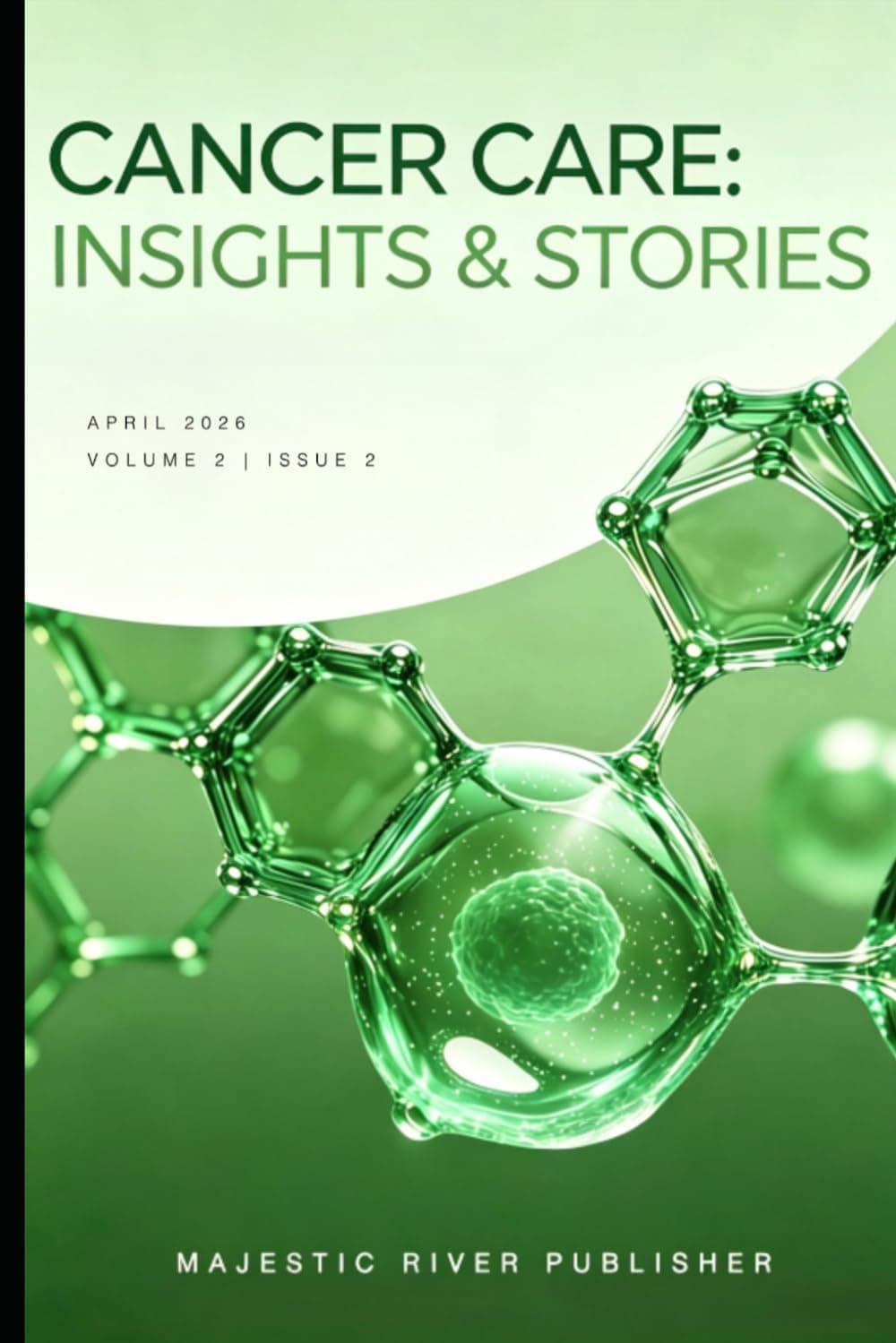
External recommended reading. A multi-author oncology review compendium (RuiRong Yuan, Jianda Yuan, Antong Chen, Gregory Goldmacher, Bo Wang, Ming Yuan; Independently published, 2026-04-22) covering sarcoma, glioblastoma, AI-driven drug development, and individualized treatment for rare and refractory cancers. Listed here as an external resource for readers in the field; not an AAI output.
From Pillar 1 · Using…
Full recording of the keynote, illustrating concretely how a practicing clinician integrates Claude Code and AI agents into daily clinical and research work. Hosted on Google Drive; open for anyone with the link.
From Pillar 3 · Using…Research stack
A layered stack — frontier language models at the top, the open-source ecosystem beneath, and curated oncology and biomedical databases anchoring every claim.
Anthropic's agentic coding CLI — the spine of our AI-augmented research and education workflows. We use it, teach it, and build on it.
Google DeepMind's long-context multimodal model — used for medical-image review, large-document synthesis, and cross-checking against Claude outputs.
OpenAI's frontier model — used as a second opinion across reasoning tasks and for multi-model voting when a single answer is not enough.
The open-source ecosystem — Python / TypeScript libraries, statistical toolkits, medical-imaging SDKs — assembled into reproducible pipelines.
NLM's biomedical literature database — the canonical source for systematic reviews, meta-analyses, and evidence mapping across oncology and urology.
ASCO, ESMO, AACR, SITC conference abstracts and clinical-practice guidelines — the working knowledge base for first-in-human trial context and biomarker strategy.
In preparation
To be released once board-approved.
Regulatory-landscape analysis (LCME, NYSED, NECHE) informing a partner institution's medical-school planning. Targeted for release after board-approved redaction.
From Pillar 2 · Using…